


Looking for effective back pain treatment in Bangladesh that goes beyond temporary relief? At Vision Physiotherapy Center in Uttara, Dhaka, we assess the underlying cause of your pain and create a personalized physiotherapy plan based on your condition. With experienced physiotherapists, modern digital physiotherapy, and 1:1 care, we help reduce pain, improve mobility, and support your return to comfortable movement—without unnecessary surgery.
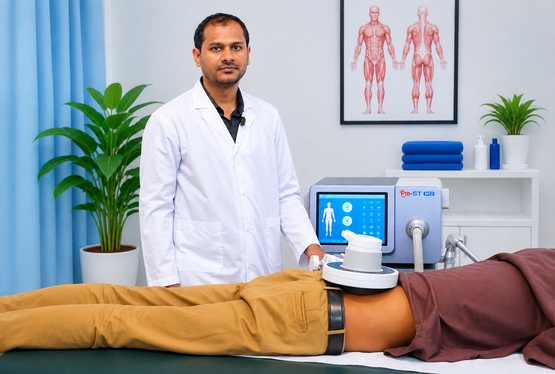
Back pain is one of the most common health problems in Bangladesh. It affects office workers who sit for 4-5 hours, drivers stuck in Dhaka traffic, mothers recovering after delivery, and older people with stiff spines. Many people ignore it for months, rely on painkillers, and only seek help when the pain stops them from working or sleeping.
At Vision Physiotherapy Center in Uttara, Dhaka, we offer back pain treatment built around one idea: find out why your back hurts, then fix that. We do not use a one-size-fits-all package. Every patient gets a proper assessment and a plan made for their body and daily life.
If your pain is recent, long-standing, or keeps coming back, this page explains how back pain is treated, what to expect at our clinic, and when you should see a doctor first.
Back pain rarely has one simple cause. The most common reasons we see in Bangladesh include:
Long hours at a desk, on a phone, or driving put constant strain on the lower back.
Lifting heavy items the wrong way, sudden twisting, or weak core muscles.
A bulging or prolapsed disc (PLID) can press on a nerve and cause pain that travels into the leg..
Sharp or burning pain from the lower back down the buttock and leg, sometimes with tingling.
Age-related wear in the spine that causes stiffness, especially in the morning.
Weak abdominal and pelvic muscles can leave women with lingering lower back pain.
Lorem ipsum dolor sit amet, consectetur adipiscing elit. Ut elit tellus, luctus nec ullamcorper mattis, pulvinar dapibus leo.
You may need professional back pain treatment if you notice:
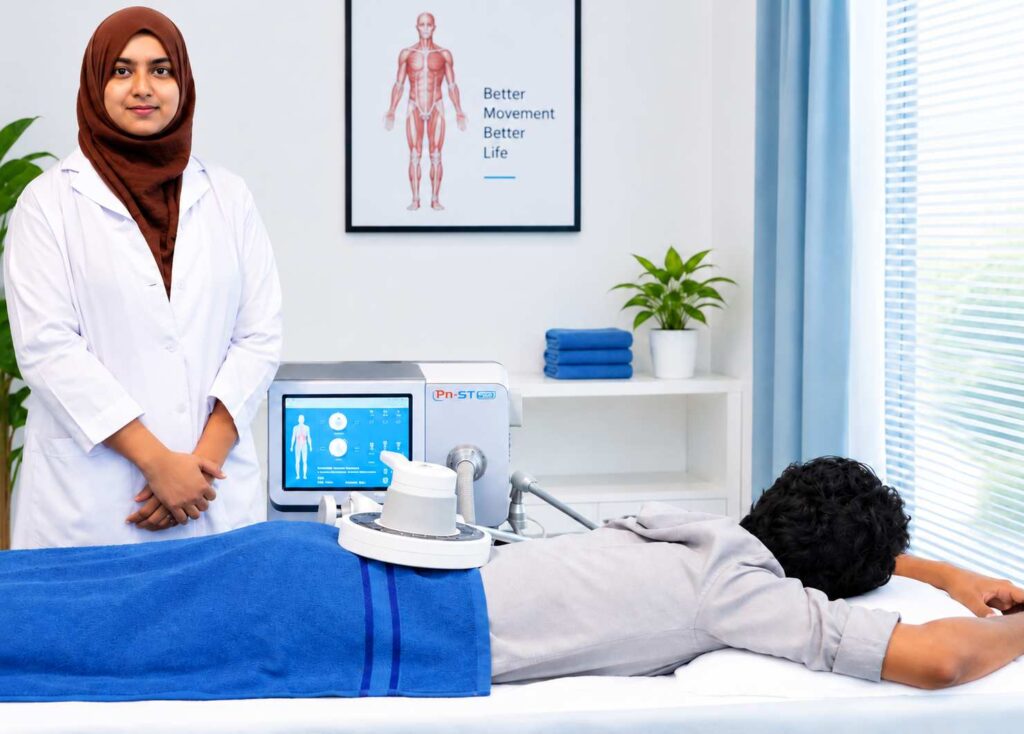
Every back is different, so we don’t hand you a standard package. Here is how your care usually goes.
Your first visit is mostly a conversation. We ask where it hurts, what makes it worse, how you sleep, what your work day looks like, and whether you’ve had injuries before. Then we check how you stand, bend, and move, along with your muscle strength and nerve function. If you already have an X-ray, MRI, or reports, please bring them. They help, but we treat you, not just the scan.
Once we understand your pain, we tell you what we think is causing it, in plain words. Together we set goals that matter to you, like sitting through a work day, playing with your kids, or walking without leg pain. You’ll always know what we’re doing and why.
Staying gently active usually helps back pain more than long bed rest. Your treatment may include:
Guided exercise to build the core, hip, and back muscles that support your spine. This is the heart of your recovery.
Hands-on physiotherapy to ease stiffness and help your spine and hips move better, always together with exercise.
Everyday posture advice for your desk, car, bed, and phone habits.
Nerve-gliding exercises if you have sciatica or pain moving down your leg.
Extra therapies when they help. For some patients we may add options like PEMF, NMES, acupuncture, or shockwave. These are optional extras, never the main treatment, and we only suggest them if they suit you.
Every few visits we review how you’re doing and adjust your plan. Before you finish, we give you a simple home routine so the pain is less likely to return. And if we think you need a doctor’s opinion or a scan, we’ll tell you honestly.
Living with back pain is tiring. It affects how you sit at work, how well you sleep, and even how you play with your family. You don’t have to put up with it any longer. Visit our clinic in Uttara, Dhaka, and our physiotherapy team will listen to your story, find out what is really causing the pain, and build a recovery plan that fits your life. We will explain everything clearly and give you honest advice at every step, including when you need to see a doctor.
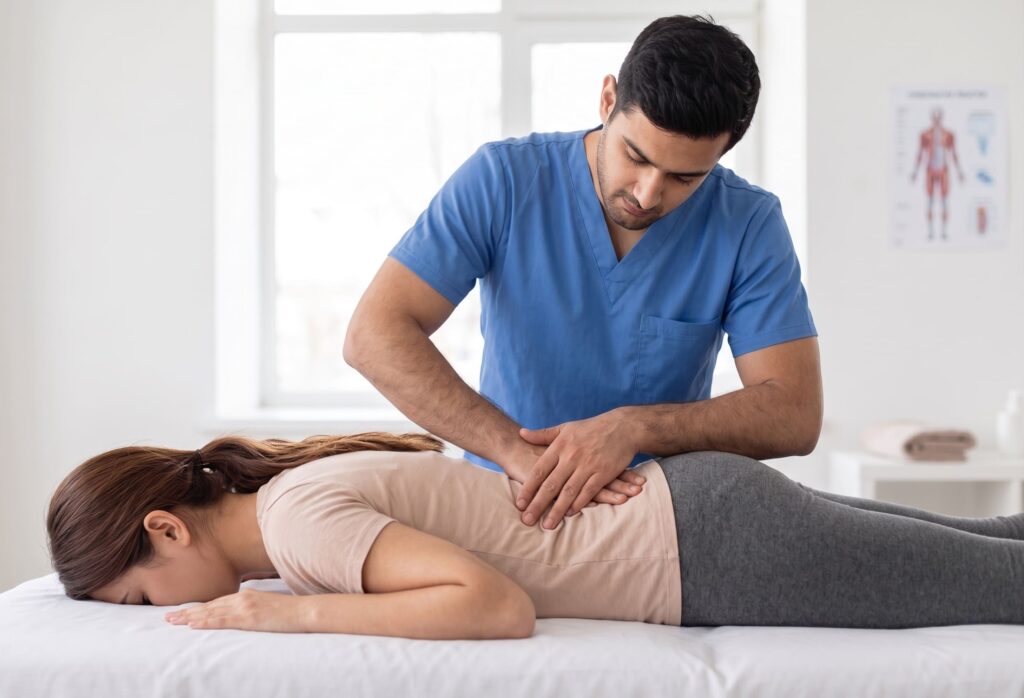
Care focuses on reducing nerve irritation, restoring movement, and rebuilding spinal support. Some patients may also need a medical or surgical opinion, and we will tell you honestly if that applies.
Graded exercise and nerve mobility work to ease symptoms and help you move normally again.
Pain lasting more than 3 months often involves weak muscles, fear of movement, and poor habits. Treatment combines gradual strengthening, pain education, and activity planning.
Mobility work, strengthening, and practical guidance for daily life.
Gentle, private care with female physiotherapists, starting after medical clearance.
Ergonomic advice and exercise to correct the habits behind your pain.
BPT (DU) MDMR, Fellow (SST) Pain, Paralysis, Sports Injury & Rehabilitation Specialist Incharge & Junior Consultant
BPT (ADTU), India. DIMT (Acupuncture), Dhaka. Trained in post operative Rehabillitation, India. Expert in Pain,Paralysis,MSDs & Sports injury, Acupuncture & post operative Rehab
BPT(IHT-DU), Expert in Pain, Paralysis, Arthritis Mens Health & Sports Injury Rehabilitation, Trained in Acupuncture & Ozone Therapy, Clinical Physiotherapist

BPT (GB) Expert in Pain, Paralysis & Women’s Health Incharge & Junior Consultant

BPT (GB), Expert in Pain, Paralysis & Sports Injury Rehabilitation. Clinical Physiotherapist

BPT(GB) Expert in pain,paralysis & pediatric child

BPT (BHPI, CRP) Fellowship in Orthopedic Medicine Specialist in Spine, Limb, Bone, and Muscle Pain Management CRP (Centre for the Rehabilitation of the Paralyzed)
Persistent back pain or symptoms such as progressive weakness, altered bladder or bowel control, fever, unexplained weight loss, or significant trauma may require prompt medical assessment. The appropriate professional and tests depend on the individual presentation.
Many people with back pain may benefit from a structured rehabilitation plan. Depending on the diagnosis and individual condition, physiotherapy may support pain management, movement, strength and return to daily activities as part of an appropriate care plan.
Our physiotherapy team combines clinical assessment, therapeutic exercise, manual techniques and selected modalities to create an individualized rehabilitation plan for relevant back-pain conditions:
PLID (Prolapsed Lumbar Intervertebral Disc): Management may include condition-specific education, therapeutic exercise, movement-based approaches and selected manual or adjunctive therapies after assessment. The plan depends on symptoms, neurological findings and functional limitations; some patients may also require medical or surgical review.
Sciatica & Radiating Pain: Where appropriate, rehabilitation may include education, graded movement, neural-mobility techniques, therapeutic exercise and selected adjunctive therapies. The aim is to help manage symptoms and improve function; outcomes vary according to the underlying condition.
Spondylosis & Chronic Stiffness: Management may include mobility work, strengthening, activity guidance and manual techniques when clinically appropriate. Additional therapies are considered only after assessment and are not suitable for every patient.
Work-Related Back Strain & Postural Problems: Care may include ergonomic advice, activity modification, mobility and strengthening exercises, and selected therapies where clinically appropriate. Programs are individualized according to symptoms, work demands and assessment findings.
At Vision Physiotherapy Center, back-pain care is based on clinical assessment, individualized planning and appropriate referral when further medical investigation is needed.
Our physiotherapists have training and experience across musculoskeletal rehabilitation, pain management, neurological rehabilitation and post-operative care. The treating clinician is selected according to the patient’s needs and presentation.
We begin with a detailed history and physical assessment to identify likely contributors to pain and functional limitation. When needed, we consider existing imaging or recommend medical evaluation. Findings are used to guide an individualized rehabilitation plan.
Vision Physiotherapy uses therapeutic exercise, manual physiotherapy and selected technologies as clinically appropriate. Modalities such as PEMF, clinical acupuncture or shockwave may be considered as adjuncts after assessment; they do not replace diagnosis or necessary medical care.
Many back-pain conditions can initially be managed conservatively, depending on the diagnosis and severity. Our team provides assessment-led physiotherapy and refers patients for medical or surgical opinion when red flags, progressive neurological findings or other indications are present.
Ozone-based therapies: These are considered only for selected patients, where clinically appropriate and within professional scope, as a possible adjunct to a broader care plan. They are not presented as guaranteed treatment or a replacement for indicated medical care.
PEMF (Pulsed Electromagnetic Field) Therapy: This non-invasive modality may be considered as an adjunct for selected patients after assessment. Evidence, suitability and expected benefit can vary by condition.
Acupuncture: This may be used as an adjunct for symptom management in selected patients after assessment. Response varies, and it is combined with an individualized rehabilitation plan when appropriate.
NMES & Manual Physiotherapy: These may be included when clinically appropriate to support movement, muscle activation and functional rehabilitation.
If you are looking for a back pain doctor in Uttara, our center is a state-of-the-art facility designed for patient comfort. We serve residents of Uttara (Sectors 1–18), Tongi, Gazipur, and patients traveling into Dhaka from across Bangladesh.
Location: House No. 42, Lake Drive Road, Sector 7, Uttara, Dhaka
Chamber Hours: 9:00 AM to 9:00 PM (Every Day)
Phone for Appointment: 📱 01932-797229
Vision Physiotherapy Center provides a private and professional environment for women who need physiotherapy assessment and rehabilitation. Our female physiotherapists support care for relevant musculoskeletal and pelvic-health concerns, including:
Back Pain After Delivery (Postpartum Recovery): Care may include assessment, education, graded exercise, mobility work and core rehabilitation according to individual needs.
Back Pain After C-Section: After medical clearance, rehabilitation may address mobility, strength, scar-related discomfort and return to daily activities. The plan is individualized and coordinated with medical care when needed.
Pelvic Floor & Lower-Back Rehabilitation: Assessment may consider the relationship between pelvic-floor function, movement and lower-back symptoms. Appropriate exercise and rehabilitation strategies are selected according to clinical findings.